Call Us: +8615989235884Email: zhangjianfeng13@jianhuaintl.com
enLanguage

Galvanized Steel Wire

Why Choose Us


Rich Experience
Our company has many years of production work experience. The concept of customer-oriented and win-win cooperation makes the company more mature and stronger.

Product Application
Prestressed steel products are used to match the high-end structured of concrete such as railways, highways, bridges, mine, nuclear power plant, hydro-power, large-span buildings and used in producing port concrete pile, high-rise building foundation concrete pile and pier concrete pile, etc.

Competitive Price
We offering a higher-quality product or service at an equivalent price. As a result we have a growing and loyal customer base.

Our Service
Yogiant has a professional and highly experienced workforce. With years of business operation, they possess strong capability of business consultation and project design and can skillfully and quickly meet customers' packaged business requirements before sales.
After sales, Yogiant has a number of core logistics resources such as port, storage and transportation which are of favorable credits, reliable reputation and standard management. The company has formed a convenient and efficient capability of logistics control and management, providing customers with a complete solution of logistics.


What is Galvanized Steel Wire


Galvanized steel wire is a carbon steel wire that is galvanized on the surface by hot-dip or electroplating. Its performance is the same as that of straightening and tempering steel wire. It can be used as unbonded prestressed tendons, but at least 200-300g zinc per square meter area should be plated. It is often used as a parallel steel wire cable for cable-stayed bridges (in addition, flexible cable sleeves are also used as outer protection).

High Strength Galvanized Steel Strand


Advantages of Galvanized Steel Wire

Strength: Galvanized steel wire is manufactured from high carbon steel. It maintains the strength characteristics and resistance to other forms of wear similarly to bright steel. Though stainless may be strong enough for many applications, a high carbon steel is required for heavier loads.
Corrosion Resistance: Galvanization protects the wire from corrosion over a long lifetime of use. Bright steel will begin to corrode as soon as it is exposed to oxygen, especially if it’s exposed to water repeatedly. In addition, the zinc coating provides a near identical level of corrosion resistance to the underlying steel as compared to uncoated stainless steel.
Reliability: Though galvanized-to-finish wire rope does sacrifice about 10% of its final strength, drawn Galvanized Steel Wire loses no strength in its final state. In addition, the drawing process is a form of “pre-stretching” that may be desirable in some sensitive applications.


What are the Properties of Galvanized Steel Wire

• The galvanizing process protects the steel against oxidation.
• Steel wires protected against oxidation have a longer lifetime.
• You have a garden fence that adapts to climatic conditions and is suitable for outdoor use.
• The weight or thickness of the zinc coating is determined by considering the average life of the wire, the type, and the cost of the medium to which the wire will be exposed.
• People who want to buy galvanizedsteel wire like a garden fence will have made a profitable and nice investment.
• Galvanized steel wire is TSE guaranteed and has ISO 9001 quality certification.
• It is produced by using materials harmless to health.
•Excellent protective coating that prevents rust and corrosion Hot-dip galvanization is an effective form of protection against metal corrosion, especially used for installations in the metal structures industry.

High Strength Galvanized Steel Wire


3 Uses for Galvanized Steel Wire
 

Protection
Many people purchase galvanized steel wire to protect their properties. Because galvanized steel wire is so durable, it can be easily utilized to create a fence around the perimeter of your home. Although cutting the wire is a labor-intensive, it is worth the effort for those who want added security.
A fence constructed of galvanized steel wire will deter both animals and thieves. In some instances, galvanized steel wire is also placed on the top of fences to deter people from climbing them.


Binding
Another use for galvanized steel wire is in the binding of construction materials. Because galvanized steel wire is so strong, it works excellent in the construction of homes and businesses. Many people use it on construction sites for either binding or baling the materials. This keeps them from just toppling over.
Galvanized steel wire is considered an all-weather material which makes it so popular among builders. A home built with galvanized steel wire also benefits from an added property value. Galvanized steel wire is often used in constructing large office buildings because of its unmatched strength.


Supportive
Galvanized steel wire is often used in applications where it’s important to support wall projections or paintings. Keeping art displays properly secured on walls is important for both the integrity of the piece and the safety of admirers.
Because of its high tensile strength, galvanized steel is also useful for homeowners who want to secure their expensive artwork or mirrors safely on their walls. Whether the wire is purchased in pre-cut sizes or whether it is cut at home, buyers everywhere support its wide range of uses.


PC Steel Bar


Components of Wire Ropes

Core: The central material that strands are coiled around to form a rope. A rope core is often made of a smaller metal rope, a single strand of coiled wires that may or may not match the makeup of the surrounding strands, a coiled fiber rope, or a solid polymer core.
Wire: The individual lengths of solid metal pulled into a long cylinder. These individual wires can be of different thicknesses and made of several metals or metal alloys. Wires are essentially the basic unit of a wire rope.
Strand: The standard term for several wires coiled around a central straight wire. The number of wires in a strand varies (six coiled wires is a common design), and they may be wrapped around a wire of the same material, a different metal, or even a non-metallic polymer.


Basic Properties of Wire Ropes


Strength: The strength of a rope is the amount of tension it can undergo before failing. The point at which rope strands begin to tear is called the Minimum Breaking Force. A tension test will also determine how much force is required to deform a rope. If a deformation is small enough that the rope returns to its original shape, it’s called Elastic Deformation. If the rope is stretched so far that it doesn’t return to its original shape but doesn’t break, it’s called Plastic Deformation.


Fatigue resistance: Fatigue is the deformation of a rope, either oblique or perpendicular to its length. If a rope is bent side-to-side and deforms in one of those directions, it is fatigued. Fatigue resistance is a rope's ability to be repeatedly bent in this way and how much it can be bent in this way while maintaining its original shape and performance characteristics.


Crush resistance: When a rope is put under external pressure, that is crushing. A rope that is crushed is forced into a smaller space, which prevents the wires and strands from shifting as they should. If a rope undergoes immense crushing, the outer wires of a rope may flatten and press outward in a process called “peening.” A rope's crush resistance is its ability to resist this type of damage and the amount of force required to peen a rope is an important metric to record.


Abrasion resistance: Wear is common and expected as rope ages and sees repeated use. Abrasion is the loss of metal from a rope as it is rubbed against other metal. Ropes can be abraded by scraping against other hard surfaces, or they can be abraded by themselves, as the individual wires of a rope rub against each other and slowly wear themselves away. Abrasion resistance is a rope's ability to be rubbed and scraped without significant material loss.


Rotation resistance: Ropes are twisted about a center causing friction between the strands, which gives the rope its strength. However, ropes that are rotated while in service can fail either by being unraveled or by being over-twisted until strands begin to snap. This most commonly happens if a heavy load begins to spin. This rotational force, or “torsion,” is naturally resisted by the rope but can be overcome. The rotation resistance of a rope is its ability to resist breakage or deformation due to excessive torsion.


Applications of Galvanized Steel Wire Rope
Electrical Steel

Securing Heavy Loads

Galvanized rope is strong enough to secure heavy loads, such as those on a dockyard or ship, with sufficient abrasion resistance to avoid failure from the load shifting.

High Strength Prestressed Steel Strand

Hoists and Cranes

Thick Galvanized Steel Wire ropes are an ideal solution for the needs of heavy lifting equipment. Factory hoists, construction cranes, dockyard gantry cranes, mine loaders, and many others require a rope that can withstand immense and repeated loads over a long service life.

Pipe Pile Mould

Structural

Large structures, such as bridges, require strong supports that can stretch and move as the structure sways. Galvanized Steel Wire ropes provide the balance of strength and flexibility over a long lifespan, minimizing the need for costly repairs.

Stainless Steel Coils

Anchoring

When a heavy load or structure must remain steady, but there is no room or no budget for costly solid supports, a galvanized steel rope can provide a long-term solution that brings sufficient strength without the cost or hassle of building out a solid support structure.


Uniformity Of Zinc Layer Of Galvanized Steel Wire


The uniformity of the zinc layer affects the corrosion resistance and service life of the product, and should be included in the standard for testing and assessment. The coating uniformity η or the average value H and the standard deviation S of the coating thickness can be used to evaluate the uniformity of the coating. In the hot-dip galvanizing process, necessary measures should be taken to improve the uniformity of the galvanized layer.
The quality of the galvanized layer can be evaluated by the weight of the zinc plated on the substrate, the bonding force between the galvanized layer and the substrate, and the uniformity of the coating. The uniformity of the zinc layer is an important quality indicator of the zinc coating. In general, the corrosion always starts at the thinnest part of the zinc layer and spreads around, resulting in rust, broken wires and affecting the service life. For the coating weight and bonding force, each standard has clear regulations, but the uniformity is different. In the 1970s, the ISO standards and the standards of various countries in the world generally stipulated that the copper sulfate test should be used for inspection. By the 1980s, with the exception of Japan and the former Soviet Union, ISO standards and standards around the world no longer adopted this method. Although our country retains this method in some standards such as GB/T15393-94 "steel wire galvanized layer" in the form of "can be carried out by mutual agreement", most of them are no longer adopted. However, the old zinc coating uniformity detection method has been abandoned but no corresponding new methods have been established. In addition, there is no uniform definition and requirement for uniformity, so that some producers do not monitor and detect the uniformity of the coating well. , So as to affect the further improvement of product quality.
For galvanized steel wire, the requirement of coating uniformity is that the coating is uniform in the transverse (radial) cross-section, and the coating of each cross-section of the steel wire in the longitudinal (axial) direction is almost the same. The local zinc layer buildup (commonly known as zinc tumor) on the surface of the steel wire caused by the jitter of the steel wire, the fluctuation of the zinc liquid level, and the surface scum in the plating pot, etc., should be eliminated by correcting the tooling and standardizing the operation. Regardless of these random and irregular zinc layer accumulations, in the case of determining the tooling, stabilization process and the same operating specification, the zinc layer of each section of the steel wire will not have much difference, so you can choose one that is perpendicular to the steel wire and The cross-section of the zinc-free layer is evaluated for the uniformity of the coating.
Measures to improve the uniformity of the steel wire galvanized layer: The reasons for the uneven coating of the steel wire hot dip coating process are: (1) The wire lead is not perpendicular to the zinc liquid surface, so that the plating solution brought out when the steel wire is drawn is under its gravity when it is not solidified. Under the action, it will not be able to drip down evenly along the circumference of the steel wire, causing the coating to deviate from the geometric center of the steel wire after solidification; The difference in the various directions of the steel wire circumference; (3) The zinc liquid level fluctuates and the steel wire jitters, and the zinc liquid level scum sticks to the surface of the steel wire. The zinc scraping and the zinc layer deform unevenly. In severe cases, even the partial pure zinc layer is completely lost.


Our Factory


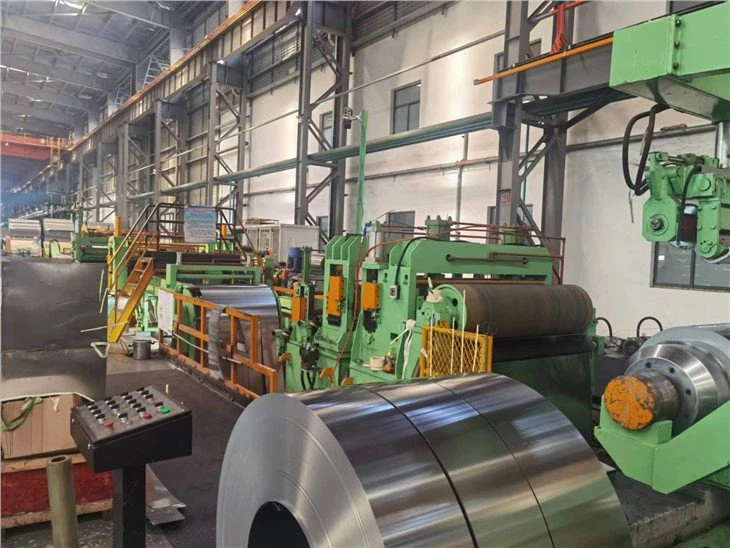
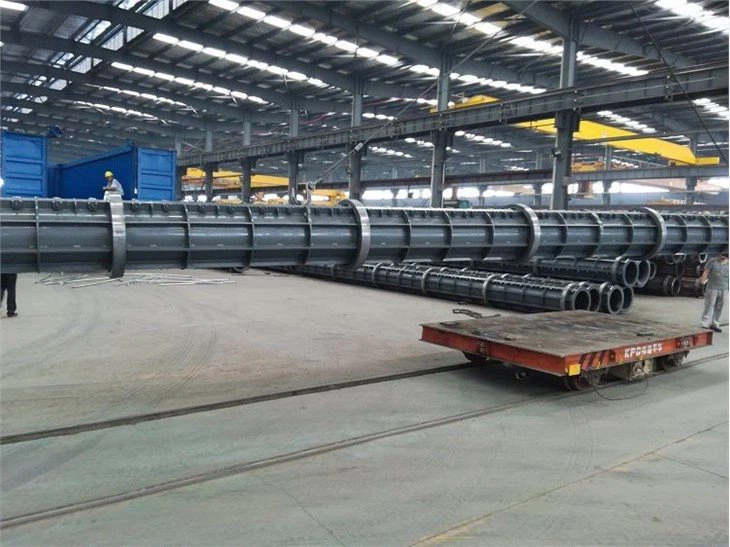
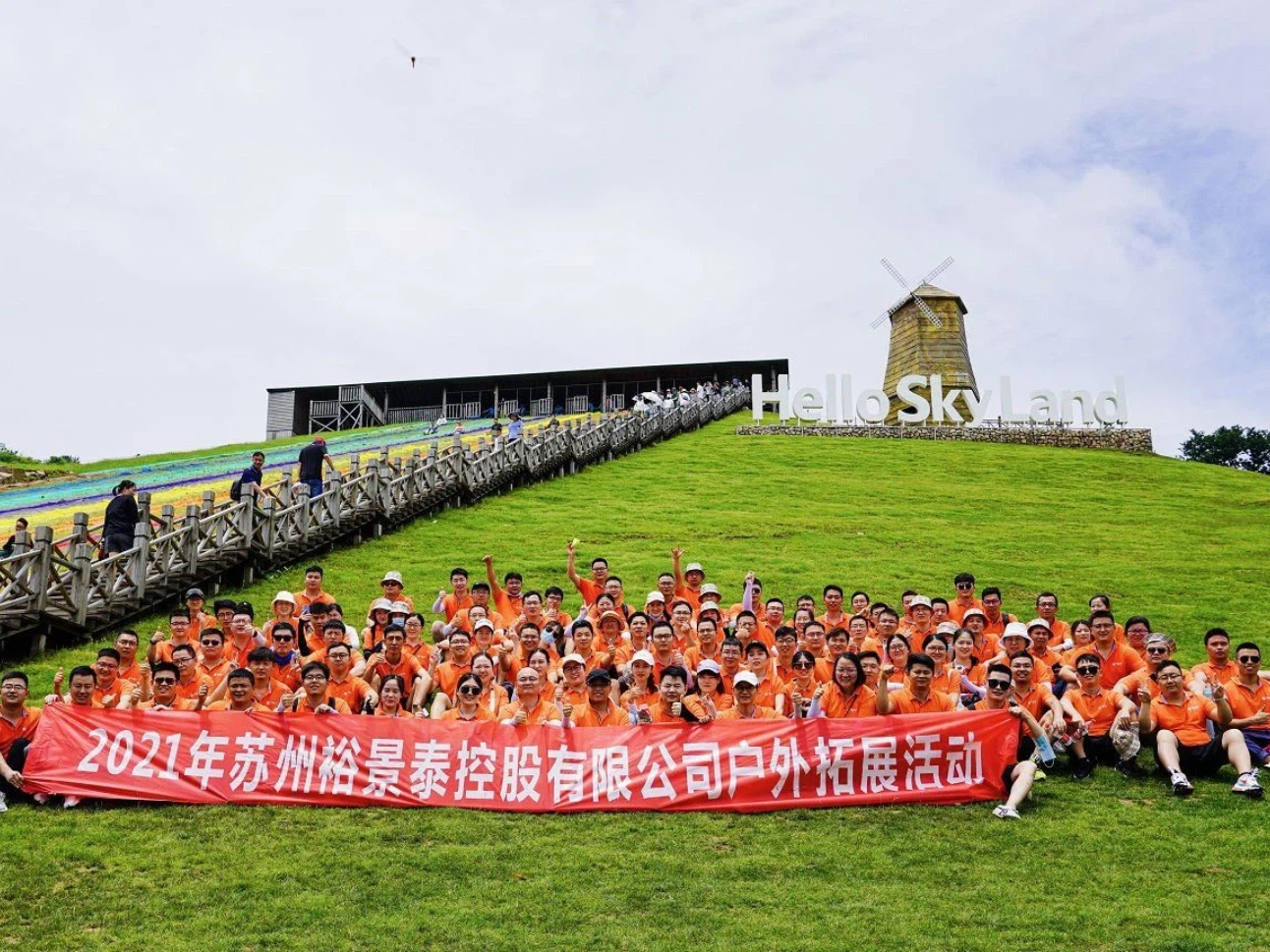
Suzhou Yogiant Holdings Company Limited, was founded on May 26th, 2015, with the registered capital (actual subscription) of 159 million yuan. Yogiant specializes in the international and domestic trade of steel, construction materials, machinery and equipment, with great business range covering steel products, special equipment and accessories for concrete pile industry and concrete products. With the development of three years, Suzhou Yogiant has gradually built its well-established service networks in Shanghai, Guangdong, Zhejiang, Shandong, Jiangsu, Tianjin and Hebei, and also has set up the overseas service networks in Hong Kong, Ho Chi Minh and Jakarta. Suzhou Yogiant has adhered to its business philosophy of "honest operation, mutual benefit and win-win cooperation" and advocated the idea of "regarding suppliers as source, employees-oriented and customers go first" since its foundation in 2015. Yogiant would like to make full use of its advantages in resources, capital and creditability, and continuously develop new business areas, and sincerely provide customers with quality products and services.
Be professional at work, and be grateful in life. Suzhou Yogiant always follows this principle and keeps pace of the times. The "partnership" mechanism is adopted in Yogiant's recruitment to attract more talented people, which also clearly demonstrates its core value of "co-building, sharing and win-win cooperation". Yogiant is dedicated to setting up an excellent platform for comprehensive trade and service, thereby creating more value for its customers, suppliers, employees and shareholders.

productcate-1292-969


Certificate
 

productcate-1-1

productcate-1-1

productcate-1-1

productcate-1-1


FAQ
 

Q: How long does galvanized wire last?

A: With a lifespan upwards of 50 years, galvanized wire costs less than other wire products and lasts longer than them too. What's more, on top of having a really long lifespan, those who choose galvanized wire will come to realize its also very low maintenance due to its strong protective outer layer.

Q: How long will galvanized wire rope last outside?

A: Zinc protects the steel, preventing damage to the wire core by the elements. It's a top choice for outdoor use, with hot-dipped galvanized steel lasting about 70 years typically. The American Galvanizers Association says that in the ocean, galvanized wire can typically last between 8 and 12 years.

Q: Is galvanized steel wire bendable?

A: Galvanized steel wire is self-tying and soft and flexible for easy use. The wire can be used for a variety of projects, including arts and crafts and even fence-mending.

Q: Does galvanized wire rust?

A: Rust prevention: Does galvanized wire rust? Galvanized wire is highly resistant to rust because of the protective zinc coating that keeps moisture away from the steel beneath. Damage resistance: A galvanized coating is solid and robust, protecting the wire from chipping, scratching and cutting.

Q: How long does it take for galvanized steel to corrode?

A: Just as the acidity of the atmosphere influences the rate of corrosion, so too does the acidity of the soil. The zinc coating of hot-dipped galvanized steel will last in the harshest soil is 35 to 50 years and in less corrosive soil 75 years or more.

Q: Is galvanized wire good for outdoor use?

A: Applications of Galvanized Wire
Fencing and enclosures: Galvanized wire helps construct fence panels and gates. The zinc coating helps to protect the wire from rusting, making it an ideal material for outdoor use.

Q: Can galvanized steel be left outside?

A: The chemical bond that forms between raw steel and zinc when it is hot-dip galvanized results in a superpower building material. It can withstand extreme weather and outlast the materials that surround it.

Q: Is galvanized steel weatherproof?

A: Galvanized steel offers excellent resistance against water and chlorine but pales in comparison to stainless steel's corrosion resistance when dealing with marine environments. The protective layer on galvanized is also not self-healing like the passive layer on stainless steel.

Q: Can you weld galvanized steel wire?

A: Welding galvanized steel is possible, but it should only be done if absolutely necessary. If you can weld the materials before they are galvanized, you will avoid the health risks associated with welding fumes and lead exposure. You will also avoid potential weak spots in your project caused by welding.

Q: Can galvanized steel touch regular steel?

A: Under atmospheric conditions of moderate to mild humidity, contact between a galvanized surface and a stainless steel surface is unlikely to cause substantial corrosion. However, if the surfaces are in the presence of salt water or salt water air, it would be best to electrically isolate the two metals.

Q: What is the lifespan of galvanized wire?

A: The lifespan of galvanised mesh in outdoor conditions is influenced by several factors, ranging from 10 to 50 years or more. It is important to consider the thickness of the zinc coating; a thicker coating generally offers greater corrosion protection. Environmental conditions also impact its durability.

Q: Can I use galvanized wire for concrete?

A: The unique durability and environmental resistance of galvanized steel make it ideal for buildings and infrastructure, especially in concrete applications.

Q: Can you paint galvanized steel?

A: You can, but without following the steps outlined above, the paint will peel and will not adhere to the surface for long periods. It's best to take the extra steps and do the job right the first time when painting galvanized steel.

Q: What can damage galvanized steel?

A: Air exposure: chemicals in the atmosphere can corrode the galvanised coating, such as sulphur dioxide, carbon dioxide, or airborne chlorides. Acidic or alkaline substances: substances with a PH outside the range of 6 to 12 can corrode galvanised steel.

Q: What flux for soldering galvanized wire?

A: When soldering galvanized steel or Zinc metal, you need an active flux like our No. 71 or No. 71-Paste. These fluxes contain the activator system needed for removing the difficult oxides that form on the surface of galvanized steel or Zinc.

Q: Is galvanized wire fireproof?

A: A galvanized steel section will therefore heat up at a slower rate than an equivalent non-galvanized section. The lower temperature rise will lead to increased fire resistance for fire exposure periods of up to around 30 minutes.

Q: Will galvanized wire rust underground?

A: Summary. Steel's corrosion rate in the soil can differ from less than 20 µm annually in conducive conditions to 200 µm annually or above in very aggressive soils. Similarly, galvanized coatings may disintegrate at below 5 µm per year in mild environments to 25 µm per year or above in hostile soils.

Q: Is galvanized wire magnetic?

A: Yes, hot-dipped galvanized steel is magnetic. The zinc coating of the hot-dipped galvanizing process does not interfere with the magnetic strength of the steel substrate.

Q: Does galvanized wire conduct electricity?

A: Yes, galvanized steel conducts electricity effectively and similarly to untreated steel.

Q: Will galvanized steel wire melt?

A: Damage resistance: A galvanized coating is solid and robust, protecting the wire from chipping, scratching and cutting. Fire resistance: The zinc coating's melting point is exceptionally high, making galvanized wire resistant to melting in a fire.

We're well-known as one of the leading galvanized steel wire manufacturers and suppliers in China. Please feel free to buy high quality galvanized steel wire in stock here from our factory. Contact us for quotation.

high tensile strength Galvanized Steel Strand, galvanized steel tie wire, hot dipped galvanized iron wire

(0/10)

clearall